Construction experience · Probability and mathematical statistics · Verifiable records
Founder
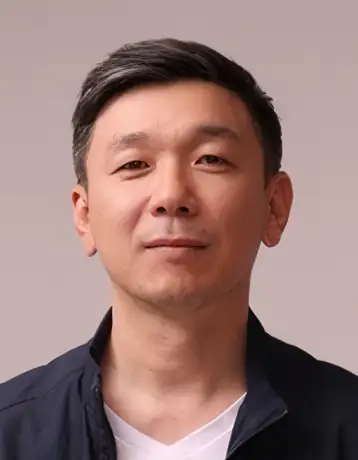
Alexander No (노송달) · Founder of DailySafe
Construction-site experience meets rigorous mathematical thinking.
DailySafe grew from real problems encountered on construction sites and a commitment to rigorous verification. Field experience reveals what matters; mathematical training asks what can be established and how.
An idea grounded in fieldwork
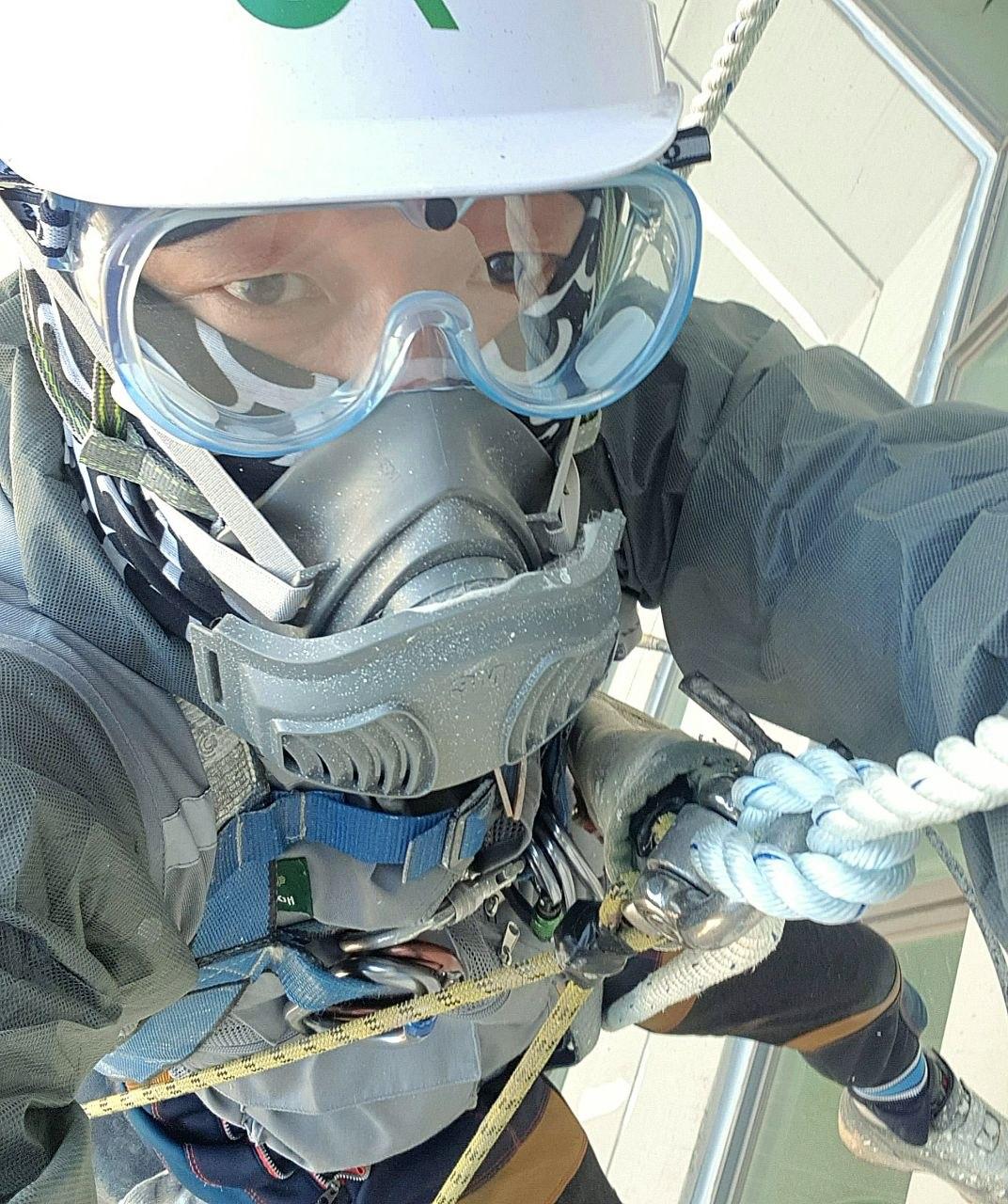
Alexander No has worked in construction over a span of 30 years, including direct involvement in high-rise exterior work using rope access.
Safety requires more than protective equipment and instructions. People must be able to establish who explained the day's hazards, what work took place, and what confirmations or corrections followed.
That experience inspired DailySafe's focus on practical safety communication and clear work histories for workers, foremen and site managers.
Why probability and mathematical statistics?
In 1995, Alexander No graduated from the Faculty of Mathematics at Tashkent State University (now the National University of Uzbekistan), earning a diploma with the qualification “Teacher of Higher Mathematics.” His education included advanced study in probability theory and mathematical statistics through a university program at master's level.
The Tashkent school of probability theory and mathematical statistics is a world-renowned scientific school. Its historical and academic center is the Department of Probability Theory and Mathematical Statistics at the National University of Uzbekistan. In 1986, Tashkent hosted the First Bernoulli Society World Congress on Probability Theory and Mathematical Statistics.
Alexander No's thesis supervisor was Anatoly Borisovich Mukhin, a professor and Doctor of Mathematical Sciences known for his research on local limit theorems. His name entered the international mathematical literature through “Mukhin’s condition,” an established mathematical term.
Under his supervision, Alexander No defended his diploma thesis entitled “Concentration Estimates for Sums of k-Sequences of Independent Random Vectors.”
From experience and research to DailySafe
Construction work involves events: starting a shift, attending a TBM briefing, confirming hours, raising a dispute and correcting a record. Storing them is different from making their history verifiable.
DailySafe research addresses event history, the link between original records and corrections, the policies applicable at the time, and signed verification evidence. Selected properties have been studied using Lean 4 formal models and software tests.
We distinguish a mathematical proof of a model, test results for software, and guarantees actually enabled in a deployed product. Keeping these boundaries clear is part of responsible engineering.
Responsibility to people
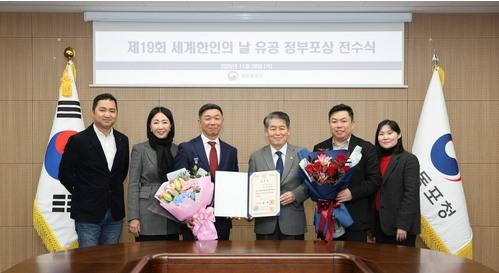
Alexander No founded the Association of Koryo-saram in the Republic of Korea (AKRK), served as its inaugural president and later continued as honorary president.
His community work received a commendation from the Prime Minister of the Republic of Korea. This experience reinforces the belief that DailySafe should help workers themselves, not just employers and administrators.
He also serves as a board member (이사) of the Yeocheon Hong Beom-do Memorial Association, supporting remembrance of Korea’s independence movement and historical and cultural ties with the Koryo-saram community.
Overseas Korean community news
대한고려인협회 노송달 초대 회장, 국무총리 표창 수상
Reporter Park Hyun-su · November 21, 2025
Field experience identifies the problem. Mathematics clarifies what must be proved. Engineering turns the principles into practical tools.