01
What was explained
Relevant hazards and protective measures for the work.
DailySafe introduction · Autoplay starts muted.
Watch on YouTube ↗TBM briefing
Work on site
Work hours
Records and history
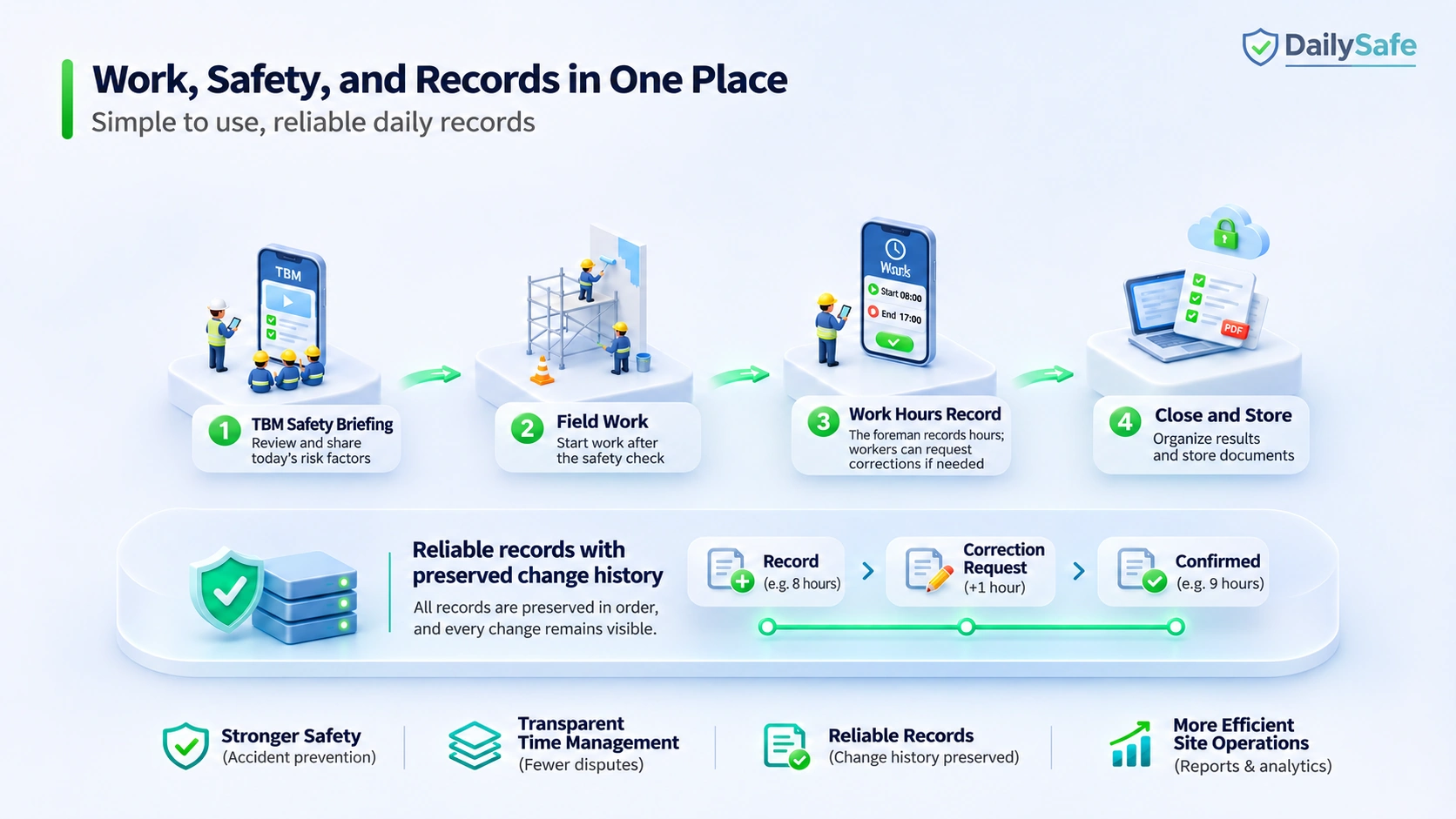
The whole system at a glance
Before work, teams review TBM guidance. Then work happens on site; the app does not monitor the execution itself. The site lead records work hours, while records and correction requests are organized separately.
The diagram shows the workflow, not live monitoring of construction. Record retention and availability depend on released functionality and storage policies.
DailySafe for worksites
DailySafe helps teams organize pre-work TBM briefings, share job-specific safety guidance, keep participation records, manage work hours, and organize site documents.
Site teams can communicate essential information while employers can more easily review what was shared and which acknowledgements were recorded.
See how it works on site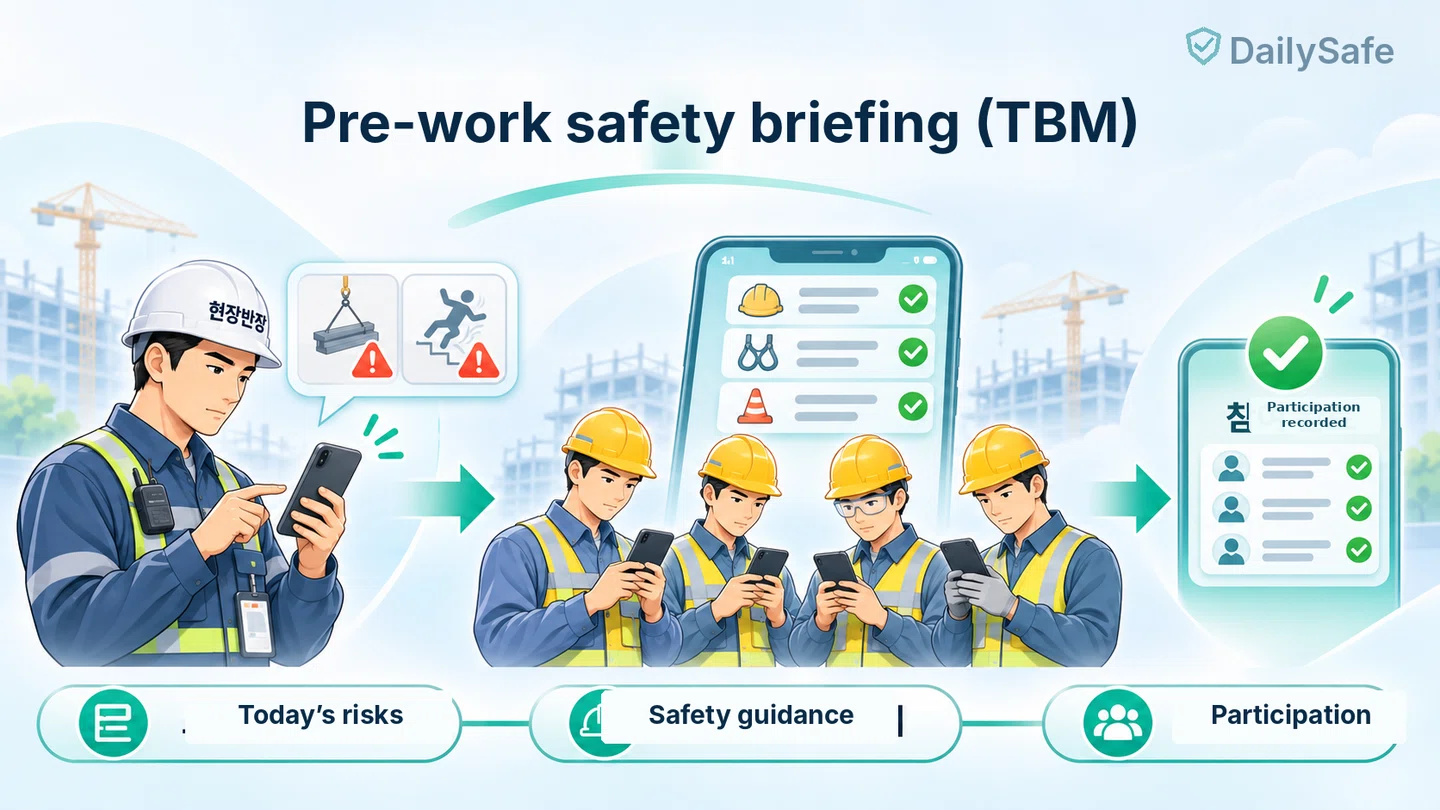
01 · Safety comes first
The foreman explains today's work and hazards. Workers can review job-specific safety guidance on their phones. DailySafe helps organize records of actual participation and supporting materials.
Foremen are busy, and the same warnings often need repeating every day. Routine can make key points easy to miss. Organized guidance by job type helps make briefings more consistent and lets workers revisit the relevant rules.
Site-specific conditions, changes, and worker questions still require a responsible person to address them on site.
More about TBM and safety →02 · Value for employers
Keeping briefing content and actual participation records together makes them easier to review and retrieve.
Employers need more than a record that a briefing happened. If a client or inspector asks, they need to find what hazards were discussed and which participation records exist. Organized site records are easier to retrieve than scattered papers and messages.
Relevant hazards and protective measures for the work.
Actual participation and individual acknowledgements, distinguished.
Available site documents in an organized place.
03 · Additional capability
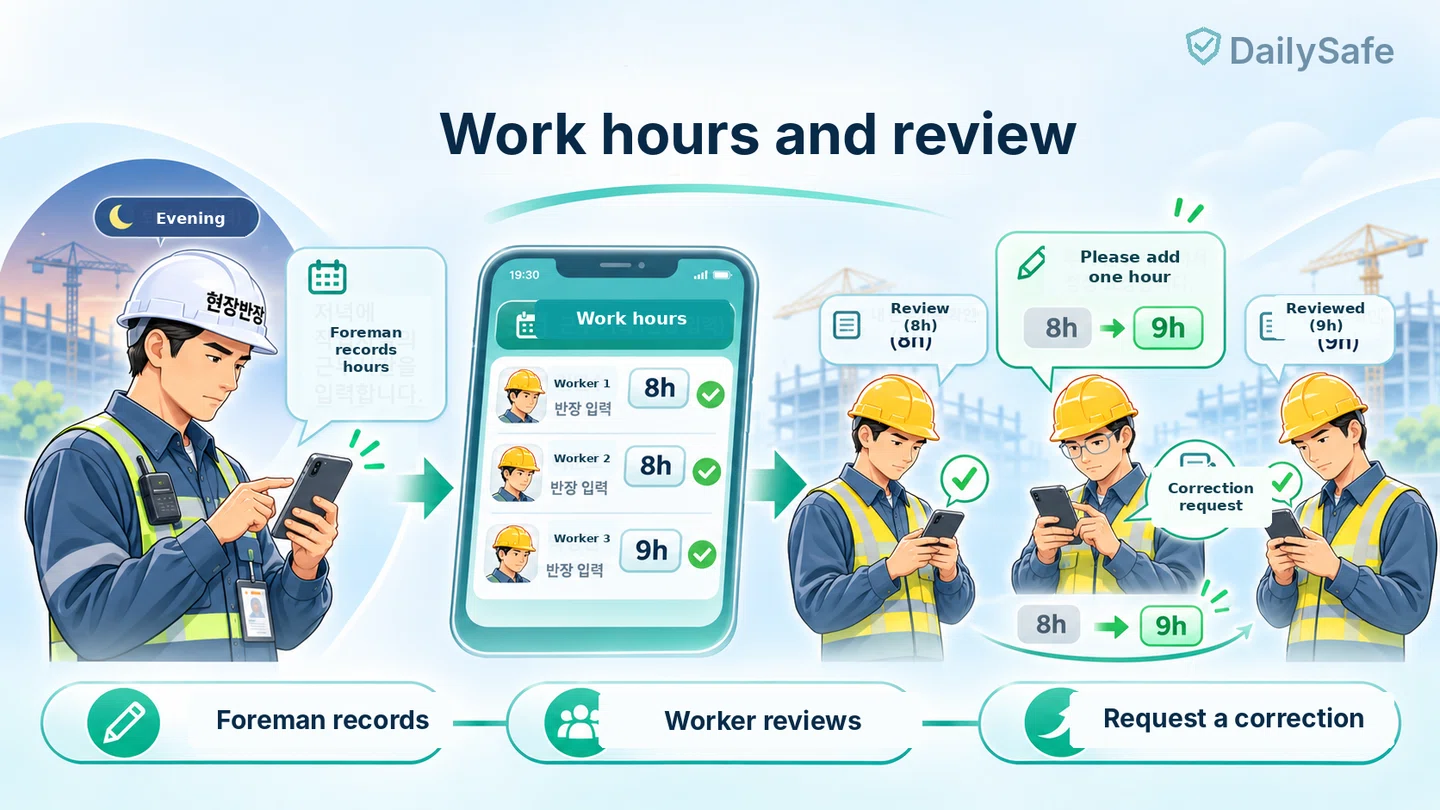
An authorized site person records work hours. Workers review their own records and can request corrections when they disagree; an authorized person considers the request.
Verbal timesheets can lead to different recollections. A clear sequence—foreman entry, worker review, correction request and decision—helps resolve disagreements. This is separate from automatic payroll processing.
The initial official work-hours entry is made by the site person in charge, not by the worker.
How work records and corrections work →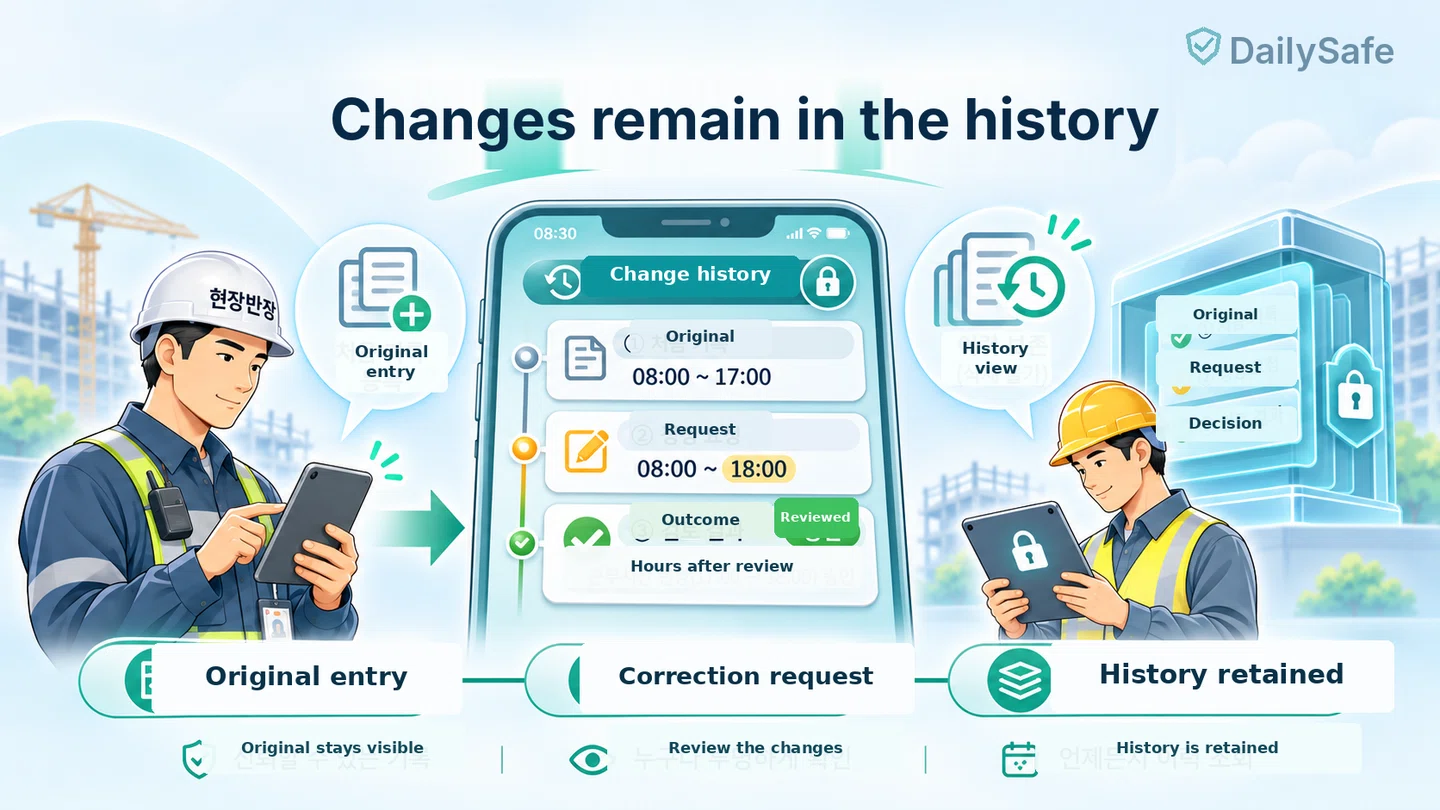
04 · Understanding changes
The initial entry, correction request and review outcome are recorded separately to make the sequence of changes easier to follow.
A final figure alone does not explain a disagreement. It helps to see the original entry, what the worker asked to change and the review outcome. Event history is not a guarantee that all system data are tamper-proof.
05 · Site records
DailySafe helps authorized users access available TBM records and site documents according to their permissions.
For a particular site and day, organized records are easier to find than scattered chats and paperwork. The available documents and download permissions depend on the product version and user access.
Read the practical guide →Article 36(4) of Korea's Occupational Safety and Health Act permits electronic methods of communicating specified risk-assessment information. The Ministry of Employment and Labor's TBM guide explains how to share site hazards and involve workers.
DailySafe does not automatically replace physical safety checks, the employer's risk assessment, or separately required statutory safety training.
Official safety resources →Discover ways to organize safety briefings and worksite records with less paperwork.
Explore DailySafe →